

Conversion Guide - Existing Non-Compliant ASC to Compliant
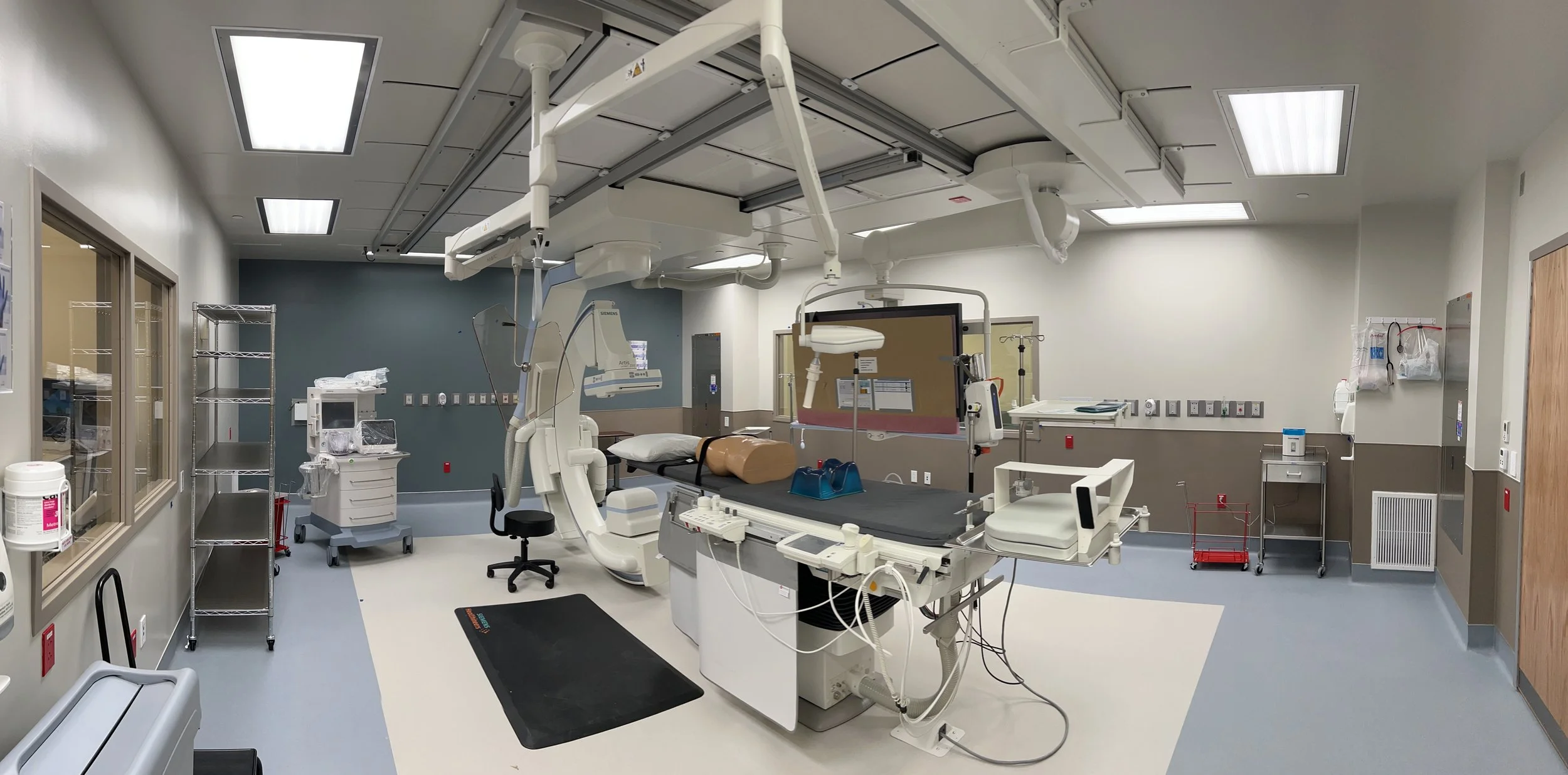
Ambulatory Surgery Centers within the state of Arizona must be licensed by the Arizona Department of Health Services (AZDHS) as an Outpatient Surgical Center under A.R.S. Title 36 and 9 A.A.C.10. In many cases, a facility that appears to comply with these standards may be non-compliant, whether due to an incorrect or expired license, or without having obtained licensure at all. The process to reach licensure or to restore a previous license typically involves both administrative strategies and physical upgrades to the facility.
The first step is determining whether the space can realistically be upgraded to meet current physical plant requirements. From there, one can evaluate whether the project qualifies as a major renovation or if it would be more practical to pursue a different facility altogether. This includes understanding if licensing bodies had previously approved this facility, what has been modified since then, and how far the current facility is from today’s standards for the ORs, life safety, HVAC, sterile processing, and support spaces. A thorough assessment early in this process helps avoid the worst case scenario: investing time and resources into a building only to discover late in the process that surveyors will not sign off on a license or CMS certification.
Pre-Conversion Factors to Understand
Correct License Type and Intended Scope
The facility not only needs to hold an ASC license, it needs to have the appropriate license aligning with the desired end state (type and function of the institution). Different classes of ASCs have varying standards.
Current Licensure Status and History with AZDHS
If the prior license lapsed, was surrendered, suspended, or revoked, the reason why is crucial to any next steps. This history can affect how closely licensing bodies will scrutinize both the physical plant and the new license application.
Existing Approved Architectural Plans (If Any)
Locate original stamped drawings and any architectural approvals or attestation forms. Compare “approved” vs. “as-built” conditions to see if the facility deviates from what the Department certified.
Building Occupancy and C of O
The current occupancy classification and Certificate of Occupancy should be in line with future intended capacity.. Changing use or increasing surgical volume may trigger upgrades to fire ratings, alarm systems, and egress.
OR / Procedure Room Sizes and Support Adjacencies
Many older generation ASCs don’t meet current sizing or adjacency expectations and may require reconfiguration.
Life Safety Features and Compartmentation
Smoke compartments, rated walls, doors, hardware, and exit paths must be reviewed. Non-compliant penetrations, missing fire separations, compromised corridors, or findings that the building is not fully sprinklered can derail licensure until corrected.
HVAC Capacity and Pressure Relationships
Verify whether existing air handlers, ductwork, and HVAC controls can provide ASC-adequate air changes, filtration, pressure differentials, and temperature/humidity control in ORs, sterile corridors, and PACU. This is a carefully balanced system and where many “clinic-grade” systems fall short.
Medical Gas Systems and Documentation
Confirm the presence, condition, and certification history of medical gas systems, if any. Check for current testing reports, proper labeling, and adequate space for manifolds and future expansion; undocumented systems are a cause for concern and possibly reassessment.
Sterile Processing and Clean/Soiled Flows
Modern facility standards favor instrument paths with a one-way flow from OR to decontam to clean assembly and sterile storage. Shared entry points, or undersized rooms are incongruent with best practices.
Patient, Staff, and Material Circulation Patterns
Walk the building to see how patients, staff, supplies, and waste are routed. Cross-traffic between clean and dirty, or patients and materials, is a common deficiency that may demand layout changes rather than just policy fixes.
Accessibility and Patient Handling
Bringing an older facility into compliance with current accessibility requirements can expand the scope of a seemingly “simple” licensure upgrade. Entry conditions, gurney routes, elevators (if multi-story), toilet accessibility, and door widths are factors of safety, practicality, and compliance.
System Age and Remaining Useful Life
MEP systems and roofs that meet standards are still vulnerable to the effects of age. Older systems can still be used if they meet performance requirements, but anticipating end-of-life will prevent an unexpected failure.
Site Conditions, Parking, and Fire Department Access
Verify that parking ratios, patient drop-off, and fire lane access align with current use and any potential changes in capacity. Site constraints can limit opportunities for growth or change without extensive civil work.