

Conversion Guide - Vacant Site to New Medical Office Building or Surgery Center
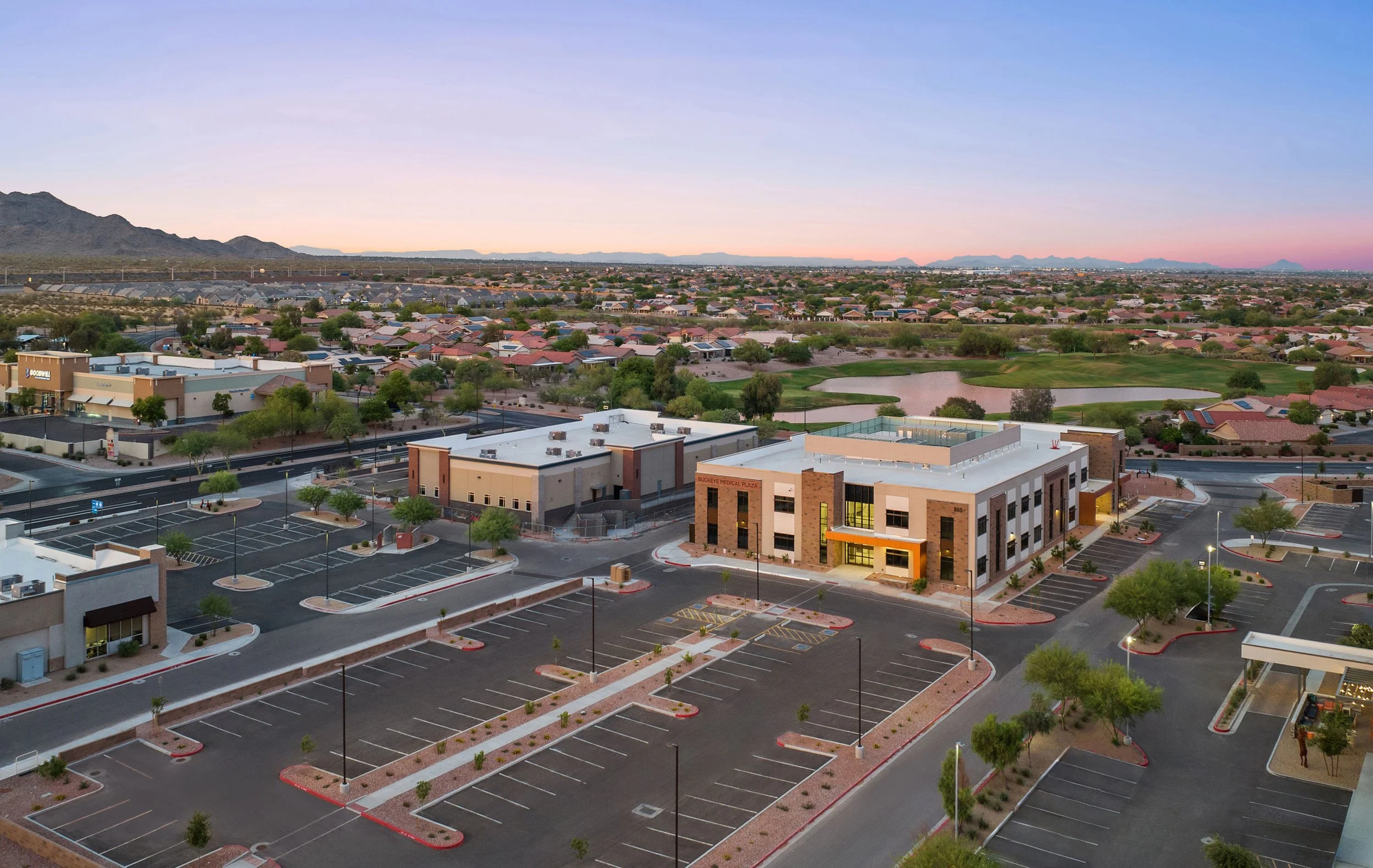
Developing a new medical office building (MOB) on a vacant parcel is a great opportunity to start with the right building from the get-go. While there’s technically no glaring constraints to work around as the project starts with a “blank slate”. Careful planning and consideration still needs to be taken to ensure today’s MOB doesn’t block tomorrow’s opportunities.
An MOB is intended to last longer than just a few years, so the building should account for all the foreseeable tenants that will be leasing there, not just the first crop of occupants that come along at the outset of the project. Developers should keep an open mind and avoid shortchanging aspects of the structure that could prove limiting an otherwise promising tenant. The more the building lends itself to being amenable to a wide range of physicians and providers, the more resilient the MOB will be into the future. Ideally, it should be able to flex between primary care, specialty clinics, and imaging and limited procedures as the market demands.
Pre-Conversion Factors to Understand
Zoning, Use, and Height/Setback Limits
Confirm that medical office and related uses (imaging, outpatient procedures, future ASC) are clearly allowed. Understand height, setback, and coverage limits so you don’t design a building that later has to be “shrunk” to fit.
Parking Ratios and Site Circulation
Before even accessing medical services, patients need to be able to access the building from the street. Medical clinic have high parking needs and there need to be a cohesive set of separate “flows” for patient, staff, delivery, and emergency vehicles. This affects building footprint, entry locations, and potential for future expansion.
Access, Visibility, and Corner/Signalized Intersections
Evaluate how patients will find and enter the site: signalized access, turn lanes, visibility from major corridors, and room for clear wayfinding. Poor access can limit tenant interest no matter how nice the building is.
Utility Availability and Capacity
The power, water, sewage, and gas needs at the new MOB is liable to change with time, especially for future tenants offering imaging or even an ASC. If upsizing is expected, it’s necessary to plan accordingly.
Floor-to-Floor Heights and Structural Grid
Floor-to-floor heights are an intensive change to make later on, and are an easy way to limit future tenants. Column spacing and ceiling reinforcement could make the space capable of supporting heavy mechanical systems and certain procedural areas.
Future Imaging / ASC-Ready Planning Zones
Identify potential high-acuity zones and consider extra slab thickness, chase space, and roof capacity to support high-load additions like imaging equipment, advanced HVAC, or future ASC conversion without major structural rework.
Flight Paths and Core Placement
The core of the MOB can serve or sever efficient circulation throughout the building. Elevators, stairs, and shafts to support clean patient flows, discrete staff/service movement, and possible future fit-outs on upper floors.
Stormwater, Grading, and Site Constraints
Stormwater management requirements, floodplain issues, and topography that may limit building placement, expansion areas, or future site amenities.
Phasing, Expansion, and Site Potential
Future use of the site will be constrained if it’s only equipped to support its initial phase. Ensuring longevity means leaving the site open to growth including additional buildings, parking structures, or ASC/mixed-use components.