

Conversion Guide - Non-Medical Office Space into a General Clinic
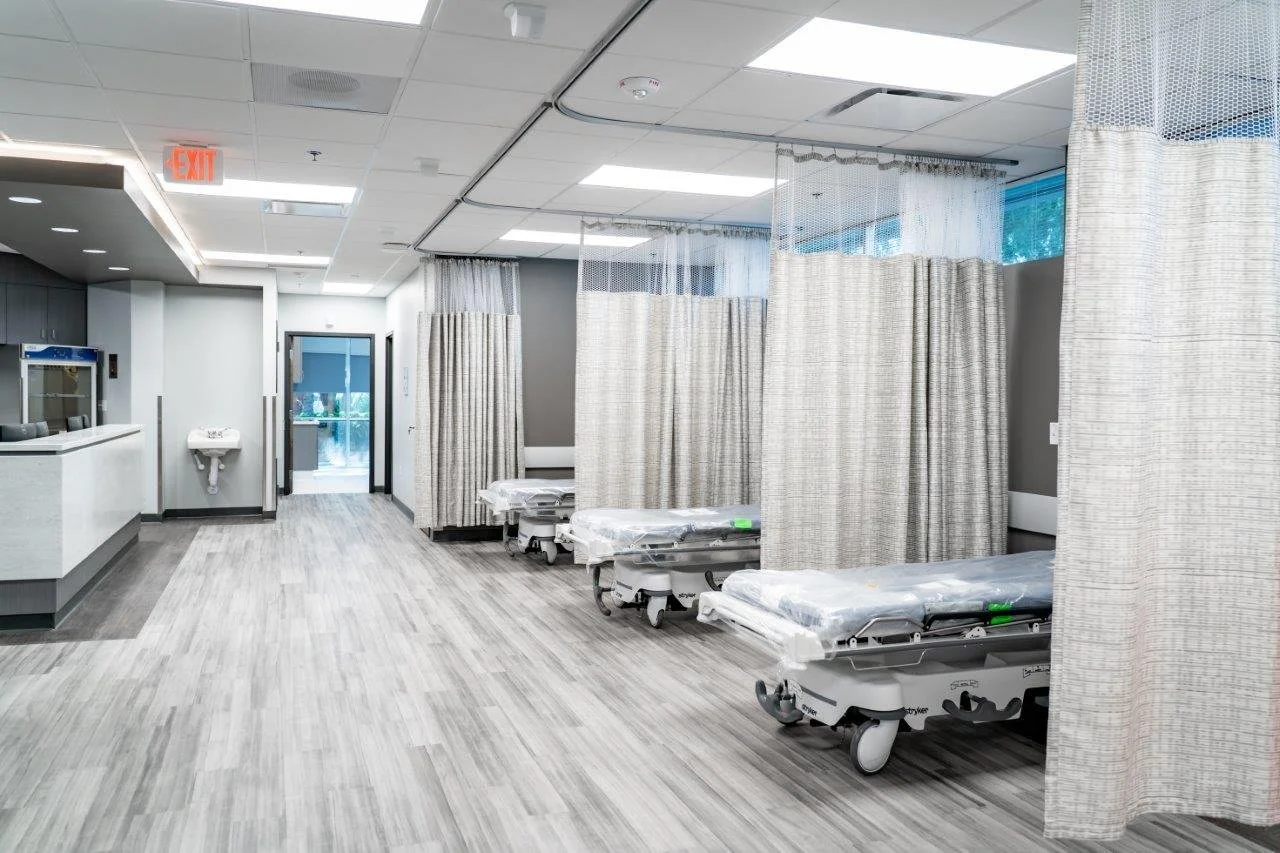
There are plenty of office suites or buildings with ample space and a promising location that appear perfect for a medical clinic after a simple conversion. That process, however, requires more than a remodel and equipment fitting. A space’s capacity to serve as a healthcare facility relies on the facility meeting a very specific set of demands in regards to power, plumbing, privacy, and life-safety. The average office is not planned to account for these demands due to the vast difference in their intended use. In addition, payer requirements, health department expectations, and FGI / healthcare guidelines often come into play and can significantly impact layout and infrastructure decisions.
Deficiencies in an existing building slated for conversion to a clinic may not jump out on a first impression. Identifying these additional hurdles requires in-depth knowledge and meticulous analysis. Failing to address certain elements early on can blow up costs, upend the project’s timeline or kill it completely. Whatever the extent of work the project requires, the best way to ensure the process is smooth, timely, and cost-efficient is to avoid getting caught off guard. The right team will perform a thorough test fit/feasibility study, ensuring that every necessity is covered to distinguish between a “light” clinic conversion and one that will behave more like a major renovation. A thoughtful design and schedule done right the first time will deliver a clinic that meets all requirements and operates at the highest standard.
Pre-Conversion Factors to Understand
Zoning, Use, and Entitlements
Critically, the space needs to be permitted for medical clinic use by-right. Additional permits involving parking and conditional use may also need to be obtained or accounted for. Incomplete permitting can create roadblocks in the planning or reviewing stages.
Parking Access and Drop-off
A clinic will require more parking to accommodate patients and staff. Drop-off areas should be amenable to ambulances (if applicable) and ride-shares. Patients also need to have a simple, clear route to the entry.
Building Code and Healthcare Guidelines
Beyond basic IBC compliance, many tenants expect alignment with FGI and payer/health-system standards, which have requirements for room sizes, clearances, finishes, and support spaces that may not line up with the current office layout.
Accessibility and Patient Mobility
Suite upgrade may trigger an evaluation of accessibility. Door widths, elevator access, toilet rooms, and path of travel are often inadequate in older office buildings.
Power and HVAC
Conversion from an office to a clinic means significantly higher electrical and HVAC needs. Panel capacity, distribution, rooftop or mechanical space, need to be able to support this high-energy operation or have the space to account for upgrades.
Structural and Floor-to-Floor Constraints
Existing structure and slab conditions can limit plumbing routing, equipment placement, and ceiling heights. Some elements can turn out to be impossible to penetrate, hang, or reconfigure without major structural modifications.
Infection Control, Finishes, and Acoustics
General clinics, while not necessarily as sterile as a surgery center, still need cleanable surfaces, handwashing stations, and acceptable acoustics for patient privacy. Upgrading finishes and acoustics can already impact budget, and installing additional plumbing fixtures can present a challenge in terms of both resources and space.
Entry and Patient Flow
Office lobbies and corridors aren’t built with the same workflow in mind. Entryways, check-in/out, sub-waiting, and paths between exam, lab, and support areas is critical to both patient circulation and staff efficiency.
Back-of-House and Staff Areas
Clinics need dedicated staff touchdown, workrooms, med storage, and supply handling. Cramped, inefficient, or non-compliant staff support spaces will hurt the clinic’s performance just as much as any poorly-designed aspect.
Phasing and Tenant Disruption (in Multi-Tenant Buildings)
If the building is partially occupied, noise, shutdowns, and access limitations will impact other tenants. Early phasing and communication strategies can preserve these relationships and avoid delays.
Existing Building "Unknowns"
Factors that can significantly affect cost and clinic viability aren't always immediately apparent. Targeted due diligence (selective demo, scanning, surveys) reduces surprises.